

Metal CNC Machining
Your Leading KC Supplier
KC is a high-tech enterprise that manufactures hardware products for stamping, machining, turning, and wire forming, especially in stamping and turning processes, wire forming and turning. Strict quality control is ensured & customization is welcomed.
Why Choose Us
100% Satisfaction Guarantee
We're so confident you'll be happy with our services, we guarantee it.
Extensive Experience
Our team of professionals have been in the business for quite some time. Let us deliver solutions that work the first time!
Fair & Competitive Pricing
Our pricing structure is designed to make a modest profit so that we can continue to be a Hero another day.
-
![Stainless Steel CNC Milling]() Stainless Steel CNC MillingAs an indispensable part of modern manufacturing, stainless steel CNC milling technology provides reliable and efficient solutions for the production of high-quality stainless steel parts.read more
Stainless Steel CNC MillingAs an indispensable part of modern manufacturing, stainless steel CNC milling technology provides reliable and efficient solutions for the production of high-quality stainless steel parts.read more -
![Copper CNC Machining]() Copper CNC MachiningCopper CNC machining technology is a high-precision machining method widely used in modern manufacturing. It uses CNC machine tools to precisely process brass materials to meet the manufacturing...read more
Copper CNC MachiningCopper CNC machining technology is a high-precision machining method widely used in modern manufacturing. It uses CNC machine tools to precisely process brass materials to meet the manufacturing...read more -
![Brass CNC Machining]() Brass CNC MachiningBrass CNC machining technology is an advanced technology that uses CNC machine tools to precisely process brass materials. With the help of advanced CNC technology and high-precision processing...read more
Brass CNC MachiningBrass CNC machining technology is an advanced technology that uses CNC machine tools to precisely process brass materials. With the help of advanced CNC technology and high-precision processing...read more


Advantages of Metal CNC Machining
Metal CNC Machining Generates Minimal to No Waste
Metal CNC machining is not only efficient, but it can also minimize material wastage thanks to its precision and accuracy. As long as the part is designed properly in the computer, the machine itself will almost never make faulty cuts, so there will be fewer damaged parts to discard. The machine can handle precise cuts and angles without generating much waste.
Metal CNC Machining Is More Accurate and Has No Defects
One of the major CNC machining benefits is accuracy. Because CNC machines receive precise instructions from a computer — and the movements are similarly carried out under computer control — their results will be identical each time and will match the computer model closely. This is a huge advantage when it comes to creating parts with tight tolerances. This capability almost entirely eliminates human error from the equation.
Metal CNC Machining Offers More Rapid and Effective Production
Another industry-cornering CNC machining benefit is the inherent speed and efficiency of production. CNC machines are capable of producing products much more quickly and efficiently than traditional methods. Many modern units can even load the billet and unload the completed product without human intervention. Naturally, this capability leads to significant cost savings and increased productivity. In addition, this sort of automation makes parts more consistent.
Metal CNC Machining Makes Assembly Faster
Products whose components are created under computer numerical control are simpler to assemble. Because metal CNC Machining is so precise and consistent, companion parts will fit together exactly as they do on the computer. And since the process is quicker than manual machining, you’ll spend less time waiting for parts to be completed. Unless there is a problem in the computer model, all parts should fit together perfectly. This capability can save a lot of time and money in the assembly process, as there is no need for extensive fitting and adjustment.
Metal CNC Machining Separates Machines From People And Reduces the Risk That Would Otherwise Arise
CNC machining removes significant safety risks from the shop floor. By automating the machining process, you can eliminate many of the hazards associated with manual machining. In addition, CNC machines are typically enclosed, which further reduces the risk of injury.
Metal CNC Machining Uses Little Energy
CNC machining uses less electricity than older processes, thereby reducing energy consumption. In fact, according to the EPA, metal CNC Machining uses about one-seventh of the energy of traditional machining methods. There are multiple reasons; CNC machines not only work quickly but draw less power per minute than most other manufacturing methods.
Metal CNC Machining Reduces Production Costs
CNC machining is an economical, efficient, and precise process of manufacturing parts and products. metal CNC Machining also uses fewer raw materials in comparison to conventional machining. Focusing your shop around CNC technology will drastically reduce errors, production expenditures, and product costs.

CNC transforms a piece of material (metal, plastic, wood, ceramic, stone, or composite) into a specified shape by following coded programmed instructions and without a manual operator directly controlling the machining operation.
7 Uses of Metal CNC Machining
Metal CNC Machining Can Be Repeated
The best benefit of CNC punching is that once you set the design, you can make as many copies of it as your materials will allow. Whether you're making plaques. carved signs, decorations, or even car parts; once the program is in, you can just save it and reuse it whenever you want.
While there are simply too many benefits to name for CNC technology, there are even more uses than we could put on one list. Here are some of the ones you may not have heard of.
Dental Equipment
Believe it or not, dentists are known to use CNC equipment for certain procedures, particularly for dental crowns.
CNC services are often associated with wood or sheet metal, but they can make so much more. Since the equipment is precise, you can even use CNC programs to carve out dental crowns and implants.
The best thing about it is that it's easy to set up, and the precision allows it to create crowns that fit perfectly into your mouth where it was designed to fit. If you thought car manufacturers were the only ones who offered machining services, think again! Dentists have been using this technology for years.
Weapons
You may have heard the controversy over 3D printers because of their ability to manufacture firearms without serial numbers. Well, CNC machines have been around for a lot longer and have had that capability the entire time.
Not only that, CNC machines can even make modifications for firearms, including grips and other accessories. The only difference from a 3D printer is the amount of material you need to start with. However, it is illegal to manufacture firearms without a permit, but CNC mills are used in the manufacturing process for many firearm brands.
It isn't only firearms made; the military and defense industry often uses CNC manufacturing for other weapons and equipment they need. The entire industry relies on CNC manufacturing for a lot of their equipment.
Construction
While this may come as no surprise, there are many times in the construction process where CNC punching can come in handy. Some of which you may not expect.
The amount of precision is hard to match by the most skilled carpenters, and there are certain jobs, especially when working on existing structures, that require a perfect fit.
Other trades may find the need for this level of accuracy, including pipefitters, plumbers, and even HVAC technicians. The reason is mainly that CNC technology can simply offer so much more than any other tool. They can act as a router, drill press, jigsaw, table saw, jointer, even a surface planer, and more all at once, with the ability to work on any material you can think of. It's hard to beat.
Transportation
This is a broad term, and that's because CNC technology offers such broad service to the industry. Aviation, railway, and automotive industries all use CNC technology in some form or another because it offers such a wide variety of services.
Plane parts have to be manufactured with such precision to ensure the proper functioning of all parts when you are thousands of feet in the air. That's why the industry has turned to machining services for so long.
Railways and automobiles also need to be put together properly to ensure safety. When over 70 million vehicles are manufactured every year, automakers need to be certain that quality control is of the highest priority. Everything has to be uniform. Well, humans simply can't give the same amount of uniformity that machines can, making CNC services extremely valuable to the industry.
Research And Development
R&D across almost every industry will need prototypes as well as some degree of trial and error. That includes physics, chemistry, biotech, woodworking, and more. metal metal CNC machining offers the ability to take on any idea from your head and make it into reality with expert precision.
Since its inception, it's been used to develop accurate prototypes for almost every field you can name, and it continues to do the same today.
Niche Manufacturing
The truth is that CNC machines can basically do it all. Anything that needs to be manufactured from the right volume of almost any material can be done on a CNC machine.
What other machine could build an electric guitar, spinning wheel rims, a door, and a dental crown in a matter of a couple of hours? CNC technology has upped the ante for manufacturing of all different niches and styles and is only continuing to improve. No matter what your manufacturing needs are, a CNC can provide them for you.
Essential Factors You Need To Consider When Selecting a Metal CNC Machining Services Provider


Expertise and Experience
One of the most critical factors to consider when selecting a metal CNC Machining services provider is their expertise and experience in the field. Look for a company with a proven track record of delivering high-quality metal CNC Machining services for a diverse range of industries and applications.
An experienced provider will have the knowledge, skills, and capabilities to handle complex machining projects and meet stringent quality standards.
State-of-the-Art Equipment and Technology
The quality of metal CNC machining services is heavily dependent on the equipment and technology used by the service provider. Choose a company that invests in state-of-the-art CNC machines, tools, and software to ensure precise, efficient, and consistent machining results.
Advanced equipment and technology not only improve accuracy and productivity but also enable the machining of complex geometries and tight tolerances.
Material Expertise
Different materials require specific machining techniques and expertise to achieve optimal results. When selecting a CNC metal machining services provider, inquire about their experience and capabilities in machining various metals, including aluminum, steel, stainless steel, titanium, and exotic alloys.
A provider with extensive material expertise will be able to recommend the most suitable materials for your application and ensure superior machining quality and performance.
Quality Assurance Processes
Quality assurance is paramount in metal CNC Machinings to ensure that components meet precise specifications and requirements. Choose a machining services provider that has robust quality assurance processes in place, including inspection, testing, and documentation procedures.
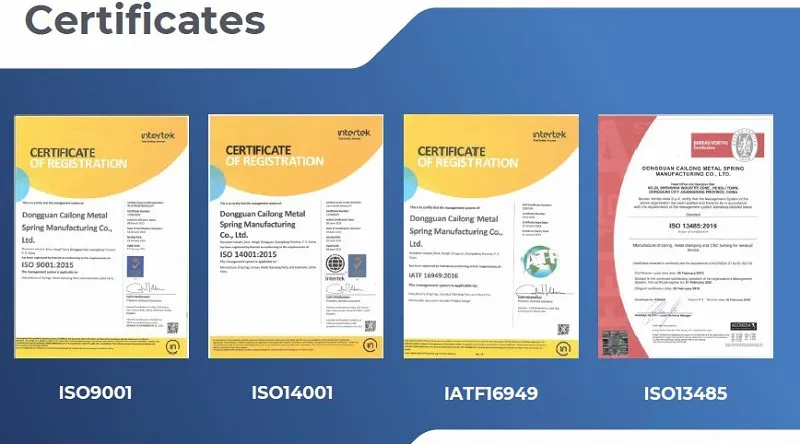
Look for certifications such as ISO 9001, AS9100, or NADCAP, which demonstrate a commitment to quality management and adherence to industry standards.
Customization and Flexibility
Every machining project is unique, with specific requirements and challenges. Select a metal CNC Machining service provider that offers customization and flexibility to accommodate your individual needs and preferences.
Whether you require prototype machining, low-volume production, or high-volume manufacturing, choose a provider that tailors their services to meet your project requirements effectively.
Turnaround Time and Lead Times
Timely delivery is essential in manufacturing operations to minimize downtime and meet project deadlines. When evaluating metal CNC Machining service providers, consider their turnaround time and lead times for completing machining projects.
Choose a provider that offers fast turnaround times without compromising on quality or precision. Clear communication and transparency regarding delivery schedules are also crucial for effective project management.
Customer Support and Communication
Effective communication and responsive customer support are vital for a successful machining project. Select a CNC metal machining services provider that values customer relationships and prioritizes clear, open communication throughout the project lifecycle.
Look for a provider that offers personalized support, timely updates, and proactive problem-solving to address any issues or concerns that may arise during the machining process.
Cost-Effectiveness
While cost should not be the sole determining factor, it is essential to consider the overall cost-effectiveness of metal CNC Machining services. Evaluate pricing structures, quotes, and value-added services offered by different providers to ensure that you receive competitive pricing without compromising on quality or service.
Consider factors such as machining capabilities, material costs, lead times, and additional services to make an informed decision that aligns with your budget and project requirements.
Factors to Consider When Selecting Material for Metal CNC Machining Project
As discussed earlier, CNC machines are designed to support various types of soft and hard materials but that doesn’t ensure your project success. Consideration of the following factors will help you with the right selection.
The first material selection consideration must be addressing the purpose of the component being machined. CNC machines are used for manufacturing a wide range of products across industries like mechanical, aeronautical, automobile, electronic, etc. The utilization of a machined component will help you make the right decision. Along with this, it is also important to address if the component will have multiple uses or not. For example, the Aerospace industry demands lightweight yet strong material for production. Therefore, whole metals may not be material for aerospace but composite materials can be.
The material must be selected according to the operational environment. Sometimes the machined components may be exposed to chemicals, moisture, high-temperature air, etc. Therefore, these conditions must be considered while selecting the material. For instance, if the CNC machined component is being used in equipment used near water bodies or in environments laden with moisture, then the material must be corrosion and chemical resistant. In these cases, different grades of steel or plastic may be a suitable option.
A CNC machined component may be exposed to high or fluctuating operational stress and strain. In such cases, it is important to choose a material that can sustain such stress and strain. In stress and strain oriented conditions metal alloys with good bend and stress resistance can be a suitable choice.
In other scenarios, if CNC machined components are expected to work under high stress, then load stress relation must be taken into consideration. Heavy material generally withstands higher stress. However, if the application is a weight-sensitive, then lighter material with excellent bend and cracks resistance must be chosen
Often industries like aerospace demand precise dimensioning and stability in components. In such cases, a material with the least deformation factor must be selected. In order to achieve precise dimensions and dimensional stability, the material must have high machinability. Therefore, the material with high machinability and less deformation factor must be selected to work on the CNC machine.
What to Look for in Your Metal Cnc Machining Company
Do they have the experience?
Unlike 3D printing which anyone can operate from a push a button, CNC machinists require high skills and expertise. Having the best equipment out there without an understanding of how to use such equipment will mean a subpar product. If the items aren’t made to the right specifications, then pieces won’t function properly or may not be useable. This results in a lot of waste; worse, it means a delay in development for your team.
Are they reliable?
You want a company that has a proven record and testimonials that back up its work history. Do they respond quickly, and do they provide solutions to your CNC problems instead of just offering a straightforward manufacturing service? Make sure to pick up on these things in your conversations with suppliers. Reliable companies will also ensure the right quality control procedures are in place, so that the results are consistent.
What is the price?
Understand how much a metal CNC machining part should cost: complete metal CNC machining cost breakdown.
The consideration of price plays a crucial role in the decision-making process, so you’ll want to do a price comparison when choosing a metal CNC machining supplier. Choosing the lowest-cost option may sometimes result in compromises on quality, reliability, or communication. But then again, choosing a high-cost option doesn’t guarantee quality and speed either. While competitive pricing is essential, make sure to assess the overall value offered by the supplier.
Our Factory
KC is a high-tech enterprise that manufactures hardware products for stamping, machining, turning, and wire forming, especially in stamping and turning processes, wire forming and turning. Strict quality control is ensured & customization is welcomed.


Certificate
FAQ
Q: How much does it cost to CNC metal?
A 3-axis milling machine costs around $40 per hour, while a 4-axis or 5-axis variant can be anywhere between $75 and $120 per hour. The level of finish (rough or smooth) affects the pricing, and the cost of materials will be billed to the client.
Q: Can a CNC machine cut metal?
Q: What materials Cannot be CNC machined?
PVC / Vinyl / Leather / Artificial Leather. ...
ABS. ...
Polycarbonate. ...
Fiberglass. ...
The material is backed by viscose. ...
HDPE / foamed polystyrene / polypropylene foam.
Q: How much is CNC per hour?
Q: Is CNC cutting expensive?
Q: Is CNC machining wasteful?
Q: Are CNC machines legal?
Q: What is the easiest material to CNC?
Q: What metal is easily machined?
Q: Is 3D printing more expensive than CNC machining?
Q: Is 3D printing cheaper than CNC machining?
Q: Why is CNC so expensive?
Q: Why are CNC mills so expensive?
Q: Do CNC machines make money?
Q: How much should I charge for CNC work?
Q: How to calculate CNC machining costs?
Q: Is operating a CNC hard?
Q: Can you make a living with a CNC machine?
Q: How to calculate CNC machining cost?
Q: Is CNC machining a dying trade?
We're well-known as one of the leading metal CNC machining manufacturers and suppliers in China. Please rest assured to buy high quality metal CNC machining for sale here and get quotation from our factory. For customized service, contact us now.
Brass H59 CNC Machining, Iron stamping, Copper Stainless Steel Precision stamping